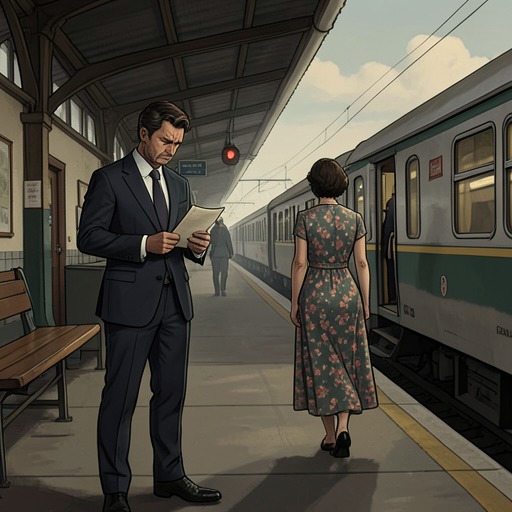
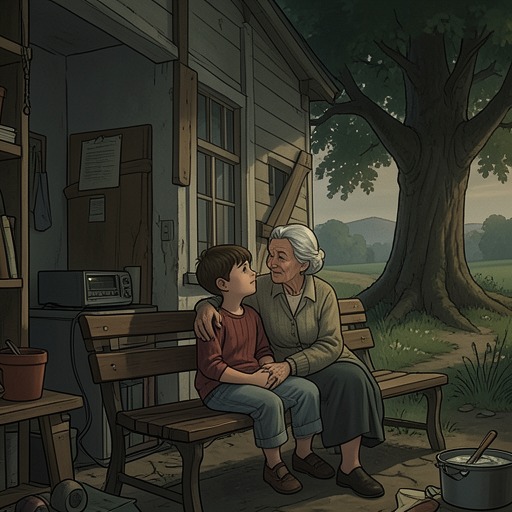
The narrator’s second visit to Balbec
In Search of Lost TimeThe narrator’s second visit to Balbec is transformed from a return to familiar seaside comforts into an encounter with belated grief. The hotel and its surroundings revive memories of his grandmother, and the visit brings him to a new understanding of his mother’s mourning and of the uneven time in which loss is felt.
Return to a Familiar Hotel
On arriving, the narrator is again soothed by the rhythms of hotel life. The lift-boy, silent out of respect rather than disdain, carries him through a building that had once seemed strange and unreadable. Now he knows its corridors and feels at home there: familiarity has softened the intimidating presence of other guests and servants. The return thus initially promises a welcome contrast with the uncertainty of an unfamiliar hotel.
Small details make the past present. The scent of the Grand Hotel’s soap calls back both the current moment and the earlier visit, while the fine, unruly sheets, which would once have troubled him, seem to cradle the anticipated sunrise. His sense of belonging is not simply a matter of recognizing the building; it depends on the work of imposing a familiar inner life upon surroundings that had once felt alien. That ease proves fragile. Before the hoped-for morning arrives, his mood changes, and he asks the manager to ensure that nobody enters his room. He declines the manager’s offer to obtain medicine and plans to remain in bed.
Grief Interrupts Social Pleasure
Before grief takes hold, the narrator can still imagine enjoying the season’s attractions. Mme de Cambremer invites him to an afternoon party at Féterne, whose gardens are described as flourishing beside the sea. A small yacht carries important guests across the bay and serves as a refreshment room during the gathering. The elegance of the arrangement has a material cost: Mme de Cambremer has sought to increase her income, including by letting La Raspelière.
That anticipated pleasure becomes inaccessible. The narrator declines the invitation, just as he has sent Albertine away, because grief has extinguished desire as fever extinguishes appetite. His mother is due to arrive the following day. He imagines that his renewed sorrow will make him more worthy of her company, but recognizes that his grief is not equivalent to hers: hers has followed the loss of the person she loved, while his comes later, through involuntary memory and belated understanding.
His Mother’s Mourning
When his mother arrives, the narrator manages to speak with her as though his grief had long been present. She supposes that seeing places associated with his grandmother has revived it, though the narrator notes that this is not what happened. His own sorrow, limited beside hers, nevertheless makes him understand for the first time what she has endured.
He sees the meaning of her blank, tearless gaze: it is fixed on the contradiction between memory and non-existence. Her mourning has altered her appearance and bearing. In her crape overcoat, she seems restrained by the sorrowful presence that never leaves her. The narrator now sees not only his mother but, in a profound sense, his grandmother: the dead have annexed the living, who become continuators of their lives. Grief, as he understands it here, can hasten the emergence of a resemblance and identity that might otherwise have appeared gradually.
Memory in the Balbec Landscape
Alone in his room while his mother reads on the beach, the narrator recalls the final weeks of his grandmother’s life, including the outer door of the flat propped open when he last went out with her. The remembered details make the surrounding world seem scarcely real, and anguish seems to poison it. When his mother insists that he go outside, recollections of the casino and the street he walked on the first evening, as far as the Duguay-Trouin monument, repeatedly stop him. He lowers his eyes and turns back toward the hotel.
The return is defined by an absence that no familiarity can overcome. He knows that he can wait there for as long as he likes without finding his grandmother as he once did on the evening of their arrival. The hotel remains recognizable, but memory has changed the terms on which he inhabits it: a place once bound to shared experience now measures the impossibility of restoring it. The visit therefore marks not a completed passage through grief but the moment when recollection makes loss newly intelligible.